Before Blinkit existed
In 2017, nobody in India had made local delivery work at real scale. Hyperlocal players like Grofers had taken on a large amount of funding since 2015 and were finding on-demand delivery a genuine money pit; Amazon, Flipkart and Paytm Mall were only just starting to call grocery the next e-commerce frontier.
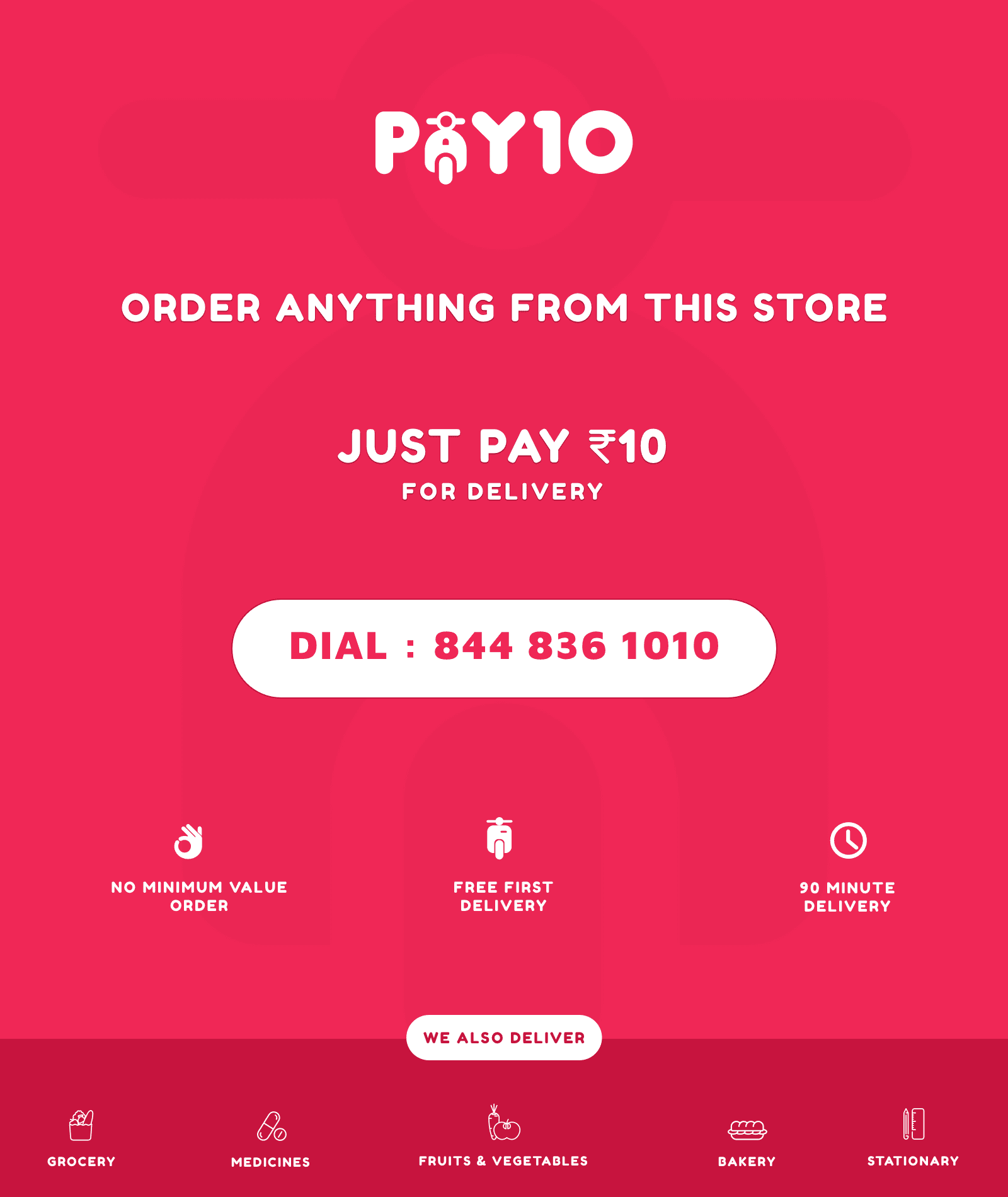
Pay10 started from a narrower, cheaper bet: instead of a warehouse and a fleet, partner with the shops a neighbourhood already trusted, and make the delivery itself the product. As one of three founders, my side of it was growth marketing and business strategy, the research, the vendor relationships, the customer acquisition and the operational data underneath all of it.
The research before the roadmap
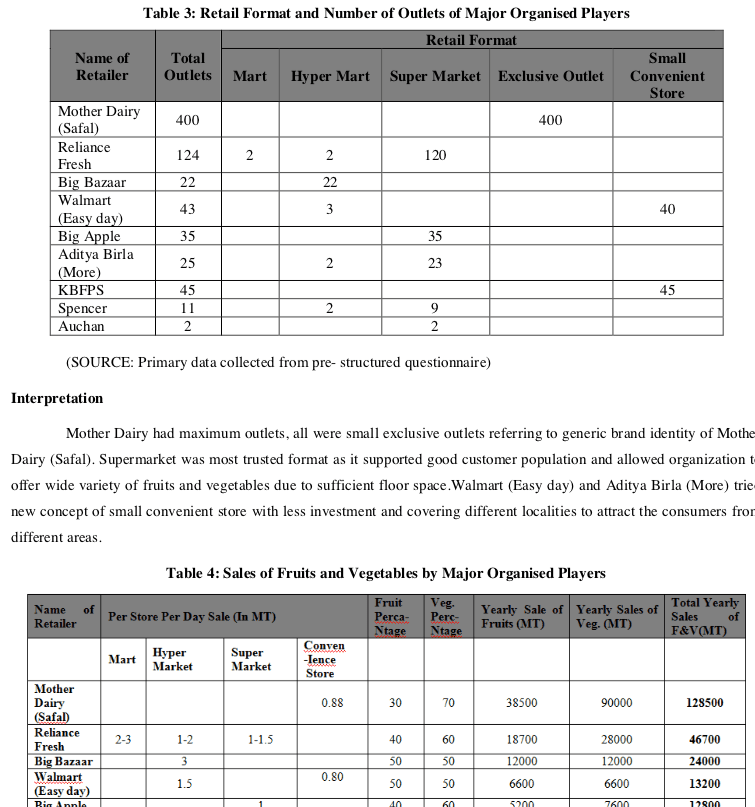
Before any of it launched, this ran through a formal market study of Delhi NCR's fruit and vegetable retail: primary interviews with major organised players (Big Bazaar, Mother Dairy, Reliance Fresh, Walmart Easyday, Big Apple, Aditya Birla More, Spencer's, Auchan) and traders at Azadpur Mandi, cross-checked against secondary data from APMC and the Delhi and National Horticulture Boards.
The research mapped exactly how many outlets each organised retailer ran and in what format, mart, hypermarket, supermarket or exclusive outlet, and used a hybrid of the 4Ps and 3Cs frameworks to turn that into a strategy: where the big organised players were strong, and where they genuinely weren't.
Where the ₹10 came from
The research kept surfacing the same gap: e-commerce was built for big-basket orders, but nobody was serving the small, spontaneous need, an ice cream, a phone charger, a strip of paracetamol, at 9pm on a weeknight. Local Kirana vendors already won that fight on convenience; mandi vendors won it on price and freshness for fruit and veg. Pay10's bet was to make that same convenience available without walking fifteen floors down for it.
The ₹10 fee wasn't arbitrary. Delivery pricing was modelled category by category, grocery, fruit & veg, medicine, confectionery, stationery, fast food and mixed orders each carried their own tiered rate by size and weight, since a single bike couldn't carry everything for one flat price.

Recruiting the street
The second half of the business was the shopkeepers, not the customers. Research pointed to Dwarka as the test zone, and the approach there was direct: knock on doors, talk to owners, partner rather than compete. Some vendors were already trying to self-deliver, faster than Grofers or Bigbasket but capped by their own cart-value minimums, exactly the gap Pay10 was built to fill.
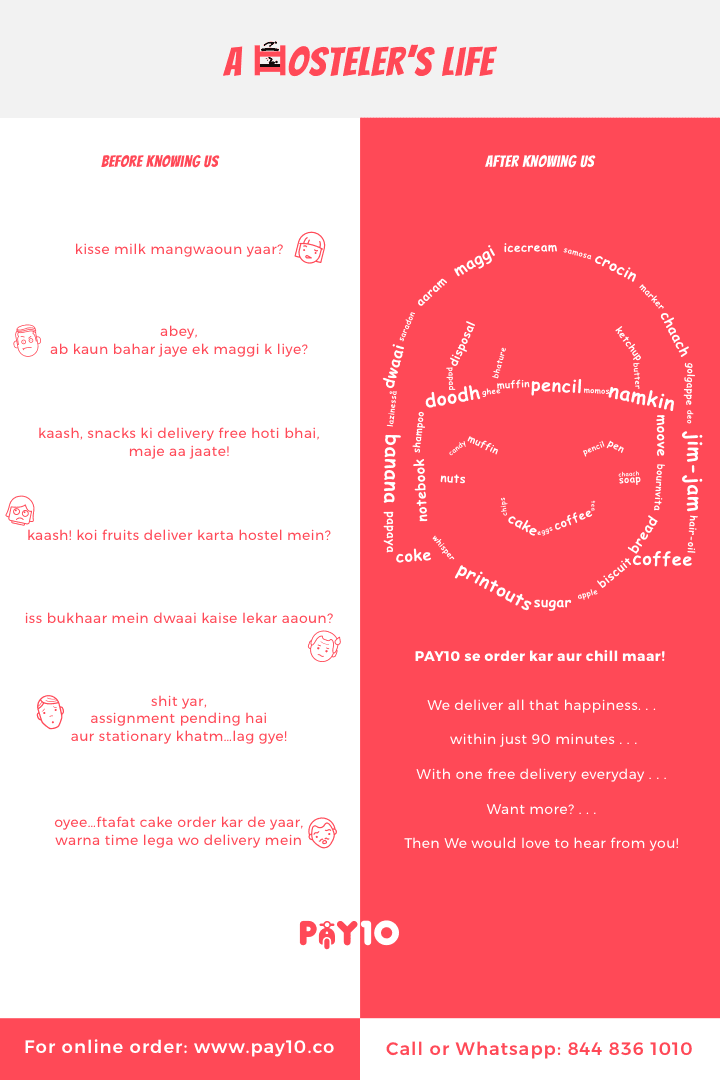
Vendors got a cut of pricing and a fixed fee per order in exchange for handing over their delivery ops; in return, Pay10's branding sat in their stores, and the team worked the neighbourhood in person, evening market visits, door-to-door pitches, and flyering aimed at hostel students, the household that feels a 9pm craving hardest and has the least patience for a walk down and back up.
Running it by hand
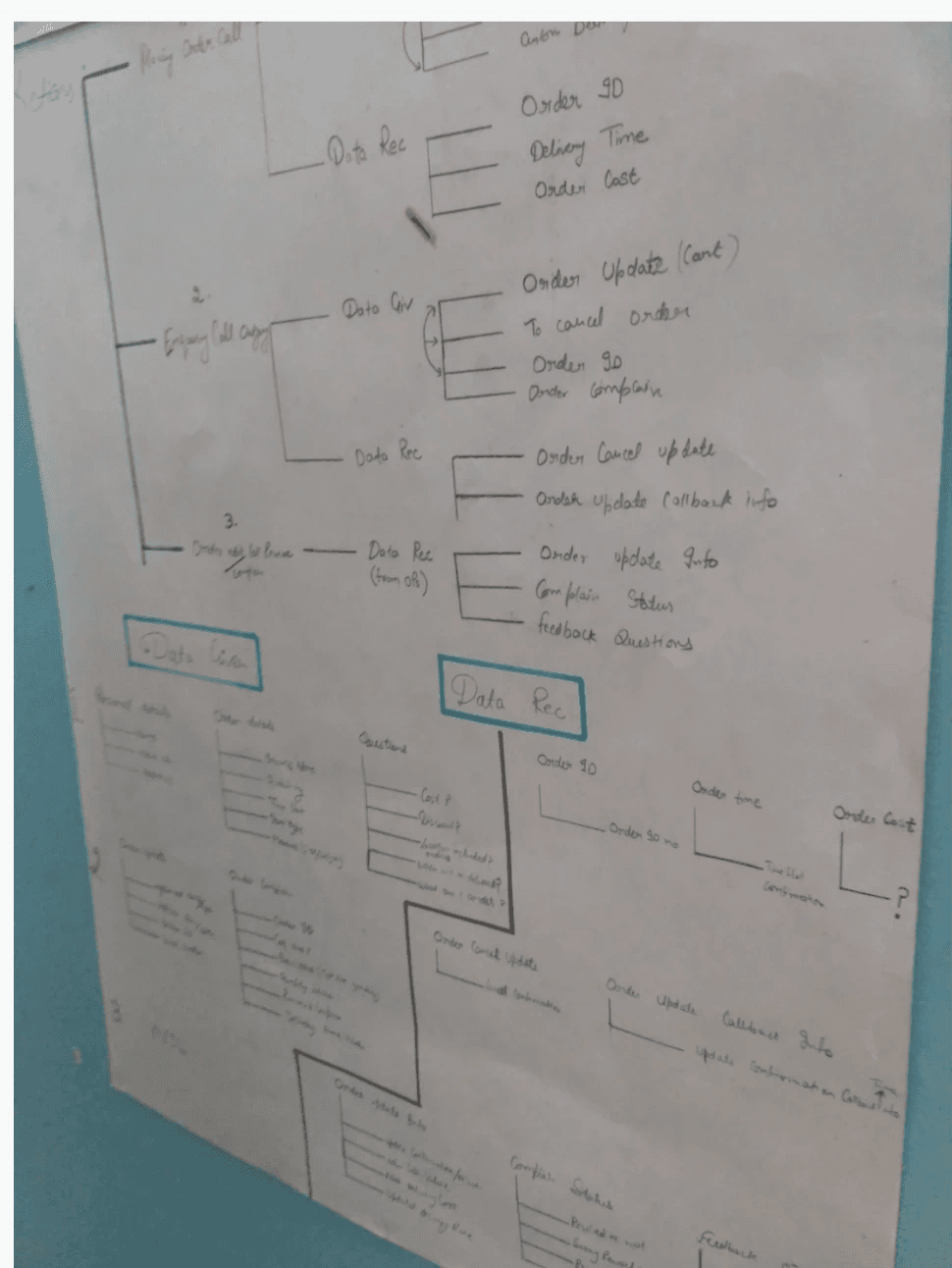
There was no ops platform. Every part of the business, order intake by call or WhatsApp, cancellations, delivery confirmations, complaints, was mapped as issue trees on paper and taped to the office wall, built to be MECE: mutually exclusive, collectively exhaustive, so nothing about an order's life fell through a gap between two categories.
The data model behind it ran through one node, an ops manager, connecting runner data, customer data and shopkeeper data to order-picking and delivery status. I maintained the entire ops sheet myself and ran the analysis in Excel, recording every delivery, every kilometre and every rupee by hand.
What the data actually said
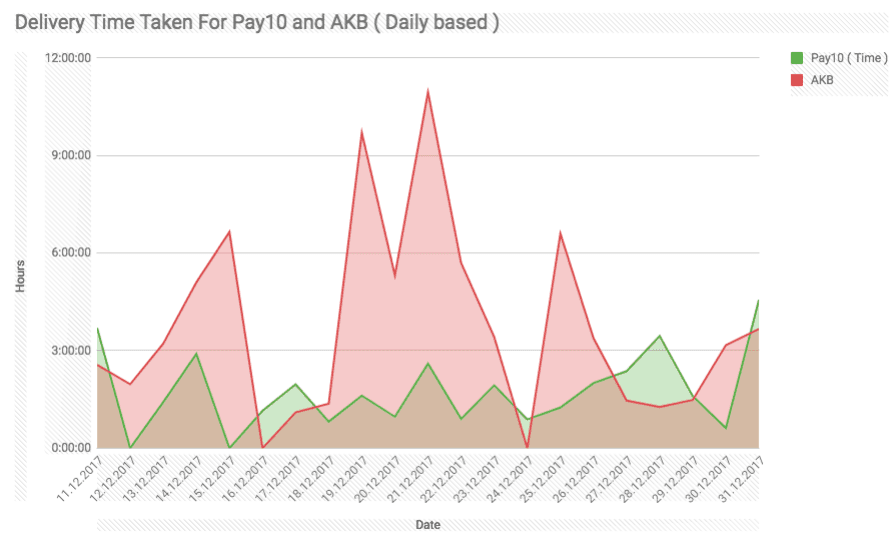
Every day that December, Pay10's own numbers were logged against a real local competitor: order value processed, average delivery time, kilometres per order, fuel cost per order, so the unit economics weren't a guess. Three runners, tracked individually by name, covered a combined 1,034.5 kilometres between Pay10 and its rival that month; Pay10 alone delivered 83 orders across 31 days.
The pattern was consistent, and not in Pay10's favour: a flat ₹10 fee meant a higher cost per order than the volume a three-person team could reach on foot and by bike could sustain. It was the same wall Grofers and Bigbasket hit at the same time, solved by building in-house warehouses. Pay10 didn't have that option.
This wasn't a design case study, it was a business one: research, pricing, vendor partnerships, and the discipline to track daily numbers against a real rival by hand until they told the truth. The delivery business didn't survive the unit economics, but everything that runs a real operation, growth, ops, data, negotiation, was in this project two years before the funded version of the same idea showed up.